inquiry
Leave Your Message

Blog

What Is Plastic Molding Material and Which Type Is Best?

What Is Plastic Molding Material and Which Type Is Best?

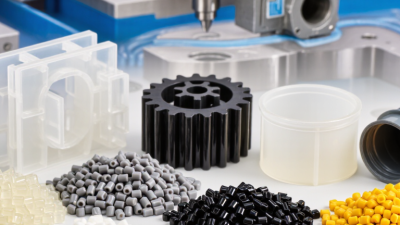
Picking a Plastic Molding Material isn't just about grabbing the strongest resin you can find. Honestly, the right one really depends on what the part's supposed to do, how it's manufactured, and the kind of environment it'll have to survive in. Take a snap-fit enclosure, for instance. You'd think it just needs to click together, but it actually needs impact resistance and a bit of flexibility. Then there's the component sitting near a heat source—that one has to hold up reliably when things get hot. And the little stuff? It matters more than you'd expect. Wall thickness, draft angles, color, surface finish, even production volume—they can all make or break the final result. Moisture absorption, or exposure to cleaning agents, can knock out materials you thought were perfect. So honestly, start with clear requirements, not by flipping through a catalog. That's where real material selection begins. So, when you're picking a material, you'll often see ABS, polypropylene, polyethylene, polycarbonate, nylon, and engineered thermoplastics thrown around. And honestly, each one has its own trade-offs—strength, stiffness, chemical resistance, looks, and price all come into play. For stuff that needs to handle heat, thermosets might be the way to go; thermoplastics, on the other hand, get picked a lot because they're easier to process and can be reused. But don't take those as hard rules. Different resin grades can behave differently, and the way you mold the part can change the final result too. Here’s the thing: just because a material works great in a sample doesn’t mean it’ll hold up the same way in a thin-walled, high-volume part. That’s a detail worth paying attention to, honestly. In this guide, we’ll look at how molding materials really differ and what can help you narrow things down. We’ll also touch on some easy-to-miss trade-offs—stuff like tooling, cycle time, and batch-to-batch consistency. There’s no one-size-fits-all material, no matter how nice that would be. The bottom line? You still need to test things out with your actual design and real operating conditions.
Read more »
Clara By:Clara - November 6, 2026
How to Choose the Right Moulding Die for Your Needs?

How to Choose the Right Moulding Die for Your Needs?

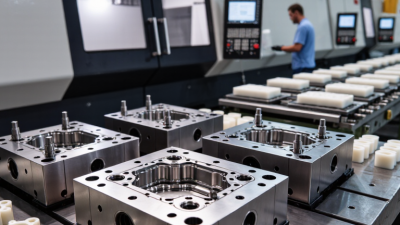
Picking a Moulding Die isn't just a tooling purchase—it's a production decision. You've got to match the design to your material, part geometry, how many parts you're running each year, the machine itself, and the finish you actually need. And honestly, the small stuff can trip you up. A gate that's even a little off can leave a visible mark right where you don't want it. Uneven cooling? That can make cycle times drag and warp parts that otherwise would've been fine. So yeah, details matter. According to Grand View Research, the global injection-molded plastics market was worth around $284.4 billion in 2023, and they expect it to keep growing through 2030. Those are big numbers, so sure, tooling choices matter—but market size alone won't tell you which mold is right for your specific part. You know, John Bozzelli—he’s an injection-molding educator—has this saying that really sticks with you: “A mold is a heat exchanger that makes parts.” And honestly, it’s a great point. Cooling, venting, gating, ejection... they all have to work together, like a system, not just a bunch of separate features doing their own thing. Start by looking at the part itself and how you plan to make it. Compare single-cavity and multi-cavity layouts, think about your steel options, what maintenance will really be like, and where you want your cycle times to land. Ask suppliers how they’ll handle weld lines, shrinkage, and getting access to the tool when repairs are needed. Ask for drawings, simulation assumptions, and a clear definition of what actually counts as acceptable. Then double-check that all of that lines up with the resin you’re actually using and your real production conditions. It sounds like a lot, but it’s the kind of homework that saves headaches later. Here's the thing—small choices tend to add up. That cheaper tool? It might end up costing you more down the road. And sure, forecasts and simulations are great, but they're not guarantees. Real production has a way of exposing problems that a tidy spec just doesn't catch. So it's worth taking the time to review things with an experienced toolmaker. It can reduce a lot of that risk, and honestly, it'll help you pick a Moulding Die that's actually built for the work you need.
Read more »
Ethan By:Ethan - November 3, 2026
How to Choose an Injection Moulder in 2026

How to Choose an Injection Moulder in 2026

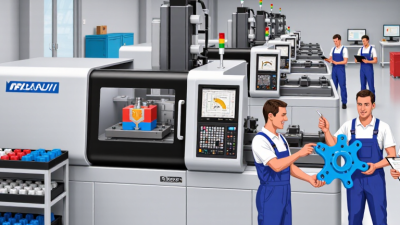
Choosing an injection moulder in 2026? Honestly, it’s about way more than just the price on the quote. You need a supplier who actually gets your part—understands the resin, the production conditions, and all those little details that keep every cycle consistent. There’s a principle from Dr. Robert A. Malloy, the guy who wrote Plastic Part Design for Injection Molding, that’s always stuck with me: design the part and the mold together, not as separate steps. Just to be clear, that’s my paraphrase of his published guidance, not a direct quote. Honestly, it really matters when something like a thin rib, a tight tolerance, or a gate that's just awkwardly placed ends up messing with filling and cooling. Honestly, details matter—a lot. When you’re talking to a supplier, don’t just ask the obvious stuff. Dig into how they validate a new tool, how they track process settings, and what they do when materials change. And ask for examples with parts that are actually similar to yours—not just polished factory photos. A good Plastic Moulder should be able to walk you through their quality checks in plain language and show you exactly what happens if a dimension starts drifting. Okay, so when you're checking things out, listen for the real specifics—like how often inspections actually happen, whether they've got sample records, who's in charge of mold maintenance, and who exactly owns corrective actions. If all you're getting is vague promises, that's not evidence, honestly. Look, price obviously still matters—don’t get me wrong. But if you really want to know what something costs, you have to look at the whole picture: tooling changes, scrapped parts, delays, and all the back-and-forth communication. If you can, get out to the production floor. Walk past the presses, check out the maintenance area, and see how operators actually log their changes. A spotless lobby? That doesn’t tell you much. Here’s the uncomfortable truth: even a supplier with a great reputation might not be the right fit for your particular project. So, if you're trying to choose an injection moulder for 2026, this guide should help. We'll look at the important stuff—technical capability, capacity, quality systems, and honestly, how they work in practice—so you can weigh it all up before making a decision.
Read more »
Ethan By:Ethan - October 31, 2026
10 Tips for Choosing Mold Making Materials?

10 Tips for Choosing Mold Making Materials?

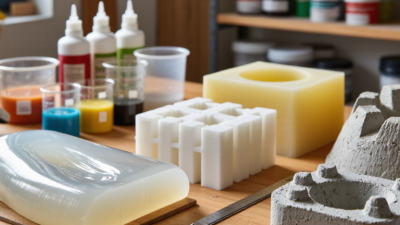
You know, picking the right Mold Making Materials can seriously make or break your project. Get it wrong, and you might end up with expenses that quietly add up. The material you go with affects so much: dimensional accuracy, surface finish, curing time, durability, and even production safety. And here's the thing—even the most detailed mold design won't do you any good if the material isn't a good match. So yeah, it's a huge deal. Alright, so let's talk about mold-making. There are ten practical tips to keep in mind when you're evaluating your options. We're looking at silicone rubber, polyurethane, epoxy, plaster – you know, the usual suspects. Each one's got its own personality when it comes to heat, pressure, moisture, and how many times you can demold it. And hey, the little things matter more than you'd think. A flexible silicone might be perfect for capturing those fine textures, while a rigid epoxy can handle the bigger, heavier stuff. Ultimately, it all comes down to your specific pattern, what you're casting, how long you want the mold to last, and the environment you're working in. That's the real deal. Honestly, from real workshop experience, product descriptions just aren't enough. You really have to dive into the technical data sheets, especially for things like viscosity, shore hardness, shrinkage, pot life, and the max service temperature. Even if a material looks perfect on paper, it's still worth doing compatibility tests – because sometimes the release agents, pigments, or surface coatings can totally mess with the final result. And here's the kicker: sometimes going cheap on materials ends up costing you more in rework than you actually save. Honestly, there’s no one-size-fits-all winner here—it’s easy to forget that. So, instead of chasing a magic bullet, these tips are all about testing things out, keeping suppliers in the loop, and being real about what went wrong before. My advice? Don’t dive straight into a full mold. Just whip up a small test piece first. Then, take a good look at the cured surface, check the edges, scan for bubbles, and see how easily it pops out of the mold. Trust me, slowing down and paying attention to those little details pays off big time. You’ll end up with a more reliable process and feel way more confident picking the right materials.
Read more »
Lila By:Lila - October 27, 2026
What Is a Molded Part and How Is It Made?

What Is a Molded Part and How Is It Made?

Ever wonder how a Molded Part comes together? Basically, a material fills a shaped cavity, and out pops a functional product. You'll find this kind of process all over the place—medical devices, car interiors, packaging, household gear, you name it. But here's the thing: the little details really matter. Something like a tiny gate mark, a wall that's not quite even, or a trapped air pocket can end up changing how it performs. So, Grand View Research pegs the global injection molded plastics market at over USD 350 billion back in 2023. They're also expecting steady growth through 2030, thanks in large part to automation, lightweight design, and the growing push for recyclable materials. Those numbers definitely say something about market strength. But they don't cover every headache on the production floor. At the end of the day, a factory still has to keep material moisture stable, mold temperature accurate, and cooling time under control. John Bozzelli—the founder of RJG—once said, 'The mold is the heart of the injection molding process.' And honestly? That still makes a lot of sense on the shop floor. Before anyone starts tweaking machine settings, operators are usually checking cavity surfaces, runners, vents, and cooling channels. Engineers, meanwhile, have to think about shrinkage, draft angles, fiber orientation, and cycle time. And here's the tricky part: a molded part can look absolutely perfect under bright inspection lights, then fail an impact or heat test. That gap—the one that makes you uncomfortable—is worth paying attention to. So, this guide walks you through what a molded part actually is, how molding equipment turns raw material into it, and why the design choices you make can affect both cost and quality. It also looks at injection molding, compression molding, and blow molding. Sounds pretty straightforward, right? Well, it isn't always. Honestly, even small decisions can end up making a big difference in production.
Read more »
Ethan By:Ethan - October 24, 2026
How to Find Top Plastic Part Manufacturers?

How to Find Top Plastic Part Manufacturers?

When you're looking for a really good plastic parts manufacturer, it's not just about checking prices online. You need a partner you can count on—so they have to show they've got process control down, know their materials inside and out, and can deliver consistently. The best ones? They'll actually walk you through how they handle tooling, tolerances, surface finishes, and the risks that pop up during production. Dr. Suhas Kulkarni—founder of Fimmtech and someone who really knows injection molding—often says, 'Injection molding is a science, not an art.' And honestly, that point matters a lot when you're evaluating suppliers. So ask for mold-flow analysis, dimensional inspection records, and proof that production is repeatable. A capable manufacturer should also be able to explain resin selection clearly, without hand-waving. After all, polypropylene, ABS, nylon, and engineering-grade materials don't all behave the same way under heat and pressure. If you can, get out to the factory. Just stand there and watch how the operators label resin, check parts, and manage moisture. Don’t be shy—ask if the inspection equipment gets calibrated on a regular basis. And when you ask for samples, try to get parts from a few different production batches, not just the shiny polished prototypes. Companies like Protolabs and Xcentric show how digital quoting and documented processes can give you better visibility. But at the end of the day, tech alone won’t replace good old practical judgment. A really low quote can be a red flag. It might mean the tooling is weak, cycle times are all over the place, or you’ll end up paying for costly fixes later. And honestly, that’s a risk that’s easy to underestimate. When you’re searching for suppliers, the phrase Part Plastic sometimes pops up, but the real question is more specific: can this manufacturer actually produce the required Plastic Part, over and over, and do it responsibly? Let’s be honest—no supplier gets everything right. Even seasoned teams sometimes miss stuff like packaging damage, shrinkage, or drawings that aren’t clear enough. A good buyer? They should push back on assumptions, write down why decisions were made, and leave some room to fix mistakes. And the best manufacturer isn’t necessarily the biggest one. It’s the partner who tells you about limitations early and actually helps you improve in ways you can measure.
Read more »
Ethan By:Ethan - October 21, 2026
10 Tips for Sourcing Injection Molded Components

10 Tips for Sourcing Injection Molded Components

Sourcing Injection Molded Components isn’t just about comparing prices anymore. It’s really a test of how well you can judge engineering, keep suppliers on their toes, and actually see what’s happening in the supply chain. Grand View Research put the global injection molded plastics market at around USD 387.5 billion in 2023, and its report sees more growth ahead through 2030. Automotive, medical, electronics, and consumer products are all pushing demand. So yes, the market is growing—but so are the risks. A cheap unit price can hide all sorts of expensive surprises: tooling changes, unstable cycle times, inconsistent resin quality. Miss one tolerance and an assembly line can stop. A drawing that isn’t clear? That can cost you weeks. As John P. Beaumont, a well-known injection molding specialist and author of Runner and Gating Design Handbook, puts it, “The mold is the heart of the injection molding process.” That idea should sit behind every sourcing call—mold steel, gate design, preventive maintenance, process validation, all of it. This guide shares 10 practical tips for sourcing Injection Molded Components with more confidence. We’ll look at supplier audits, material traceability, mold ownership, dimensional inspection, sampling, and total landed cost. The details really do matter. From experience, a polished presentation doesn’t guarantee reliable production. A supplier might pass an audit and still struggle when engineering changes come up. A strong quote can leave out secondary operations or packaging controls. That gap is worth paying attention to. No checklist is ever perfect. Fortune Business Insights data also points to steady growth in injection molded plastics, which only reinforces why we need capable, transparent suppliers. The best sourcing process ties technical evidence to real production behavior. That means asking sharper questions, looking at physical samples, and pushing back on assumptions before tooling starts.
Read more »
Ethan By:Ethan - October 16, 2026
How to Choose Plastic Manufacturing Equipment?

How to Choose Plastic Manufacturing Equipment?

Honestly, picking Plastic Manufacturing Equipment isn't just a purchasing task. It's a production decision. The machine has to fit your resin, your product geometry, your output goals, and whatever local service you can actually rely on. Fortune Business Insights put the global plastics processing machinery market at roughly USD 38.71 billion in 2023, and it expects growth to keep going through 2032—mostly pushed by packaging, automotive, medical, and construction. Demand is up. Mistakes? Still expensive. A practical place to start is the material. Polypropylene, ABS, PET, and recycled blends don't all behave the same. They need different temperature control, screw designs, drying systems, and maintenance routines. PET, for instance, is moisture-sensitive, so it may need a dependable dehumidifying dryer before injection molding. And if you're running a high-speed packaging line, stable cycle times, accurate dosing, and spare parts you can get to matter a lot. Check specs against real production trials, not just a glossy brochure. ISO 20430 gives useful guidance for injection molding machine safety. Compliance helps, sure—but it doesn't guarantee efficient production. Energy deserves just as much attention. The International Energy Agency calls energy efficiency a major factor in cutting industrial emissions. Variable-speed drives, better heaters, and cooling systems that actually work can lower operating costs over the years. That said, don't just trust supplier claims—get independent testing. A spreadsheet won't capture every factory delay either. No choice is perfect. Engineers should compare total cost of ownership: downtime, labor, tooling, utilities, training, disposal, all of it. Grand View Research also flags sustainability and recycled materials as big trends in plastics. So the strongest pick balances throughput with repeatability, safety, service support, and measurable environmental performance. This guide walks through how to compare Plastic Manufacturing Equipment using evidence, practical checks, and a little room to reconsider when something doesn't add up.
Read more »
Clara By:Clara - October 11, 2026
How to Choose the Right Moulding Die for Your Product?

How to Choose the Right Moulding Die for Your Product?

Picking the right Moulding Die can be the difference between a product that runs smoothly and one that turns into a costly production headache. It touches just about everything: dimensional accuracy, surface quality, cycle time, even material waste. And here's the thing—a die can look perfectly fine on a drawing and still struggle next to a real machine. Small errors? They matter. A tight corner can trap material. A cooling channel that isn't quite even can warp a finished part. So the choice really starts with the product, not the catalogue. Experienced engineers don't just flip through a catalog. They look at the material, the shape, wall thickness, expected output, and the equipment that's actually available. They also think about operating temperature, pressure, how the part will be ejected, and whether maintenance access makes sense. A thin-walled component, for example, might need balanced filling and careful temperature control. A larger industrial part might need stronger support and more effective cooling. Material behavior changes everything. A reliable supplier should give you clear technical data, inspection records, and practical guidance based on real applications. Ask for samples or trial results when you can. Evidence builds confidence. Still, no selection process is perfect. A calculation can miss a real production issue. Early prototypes often reveal weaknesses that drawings hide. Production trials should check flash, shrinkage, warpage, cycle stability, and cleaning time. One overlooked detail can affect the whole batch. A useful review also weighs the die's initial cost against its service life and repair needs. This guide explains how to assess each factor with practical judgment. The best Moulding Die isn't always the cheapest or the most complex option. It's the one that consistently supports quality, efficiency, and dependable production.
Read more »
Ethan By:Ethan - October 8, 2026
China Top 10 Plastic Injection Press Manufacturers?

China Top 10 Plastic Injection Press Manufacturers?

China’s injection molding industry has really become a major player in the global plastics scene. According to reports from Grand View Research and Fortune Business Insights, the Asia-Pacific region is actually leading the way when it comes to injection molding equipment. And China? It’s at the heart of all this growth, thanks to its huge automotive, electronics, packaging, and medical device supply chains. You can’t really talk about the industry’s expansion without mentioning China’s critical role. In this guide, I’ll introduce you to ten of the top Chinese manufacturers of Plastic Injection Press machines. Companies like Haitian International, Yizumi, LK Machinery, Chen Hsong, Tederic, Borche, FCS Group, Cosmos Machinery, Ningbo Shuangma, and Ningbo Beilun have all made a mark. Their machines range from small, efficient servo-driven presses to huge, high-tonnage systems perfect for automotive parts. Haitian International is pretty much globally recognized for its widespread installed base, while Yizumi and LK Machinery have really stepped up their game with automation and cutting-edge molding solutions. Tederic and Borche aren’t far behind—they’re known for energy-efficient platforms and customizable options that fit different needs. Now, let’s be honest—any ranking or list isn’t completely neutral. Factors like the size of the company, how far they’re exporting, machine reliability, customer service, and real-world application experience all influence the standings. Plus, different industry reports might define markets a bit differently—that’s worth keeping in mind. For example, a 500-ton press used for automotive trim is a whole different ballgame compared to a 120-ton machine for precise packaging. So, when you’re shopping around, it’s totally worth checking how accurate the clamping force is, how consistent the machine’s performance is, energy use, control system stability, and whether there’s good local support. Sure, supplier websites love to highlight their specs—and some of those numbers are impressive—but it’s equally important to see how machines perform in real factories. The best way to really get a sense of quality? Field trials, maintenance history, and talking to actual customers. Those insights are priceless. This overview is a solid starting point, but it's not the final word. Always dig a little deeper before making any decisions—that way, you’ll know you’re getting the real deal.
Read more »
Lila By:Lila - October 1, 2026
What Are the Top Press Molding Machines in 2026?

What Are the Top Press Molding Machines in 2026?

Looking ahead to 2026, if you're in the market for a press molding machine, picking the right one is really about matching the machine’s capacity to your specific part, the material you're working with, and your production goals. Just because a machine is huge doesn’t mean it’s automatically better. Sometimes, what really makes a difference is a stable cycle, even pressure, and good service support—especially when your factory is running at full tilt. Keep an eye on things like the platen; check how well the temperature is controlled, and ask how quickly tooling can be swapped out. Honestly, those small details can make or break whether your line runs smoothly or ends up wasting hours on adjustments. Taiichi Ohno, a legendary manufacturing guru, once said, “Where there is no standard, there can be no kaizen.” He wasn’t just talking about general manufacturing—it's a good tip when choosing between machines too. Basically, don’t just trust glossy brochures. Set up some standard tests beforehand: measure cycle times, energy consumption, reject rates, and how easy it is to get to the maintenance points—do these under similar conditions. Numbers definitely help, but the context is what really matters. When you’re shopping around, think about more than just the price. Consider things like how consistent the machine is, whether it’s compatible with your tooling, safety features, and the support you’ll get over its lifetime. Some of these details might seem boring now, but trust me, it’s better than regretting your decision later. This guide zeroes in on the main types of machines to consider in 2026—hydraulic, mechanical, and servo-driven. We’ll look at their pros and cons, plus some claims that need to be taken with a grain of salt. Keep in mind, a supplier’s claimed speed isn’t always what you’ll see when you actually run your material or mold. No single ranking is perfect either, since everything from actual production conditions to the quality of after-sales support can affect your results. Think of this as a helpful starting point—then, take the time to test your shortlisted options with your own parts, operators, and data before making any final decisions.
Read more »
Lila By:Lila - September 28, 2026
2026 Top Press Molding Machine Types for Global Buyers

2026 Top Press Molding Machine Types for Global Buyers

Picking the right Press Molding Machine really starts with understanding your product, not just flipping through a fancy brochure. For example, a compact electrical housing, a thick rubber seal, and a composite panel all place very different demands on your production line. So, when you're comparing machines, it’s important to consider things like the molding material, part sizes, quote your expected output, and the space you've got available in the factory. Tiny details matter — a narrow loading area or limited power supply can end up being just as critical as the machine’s rated pressure level. In this guide, I’ll walk you through the most common types of press molding machines used worldwide in 2026 — like hydraulic, mechanical, and some specialized setups. I’ll explain how each type's working principles impact cycle times, pressure control, tooling requirements, and maintenance routines. While these specs are important, keep in mind that having the right numbers doesn’t always mean your parts will come out perfect every time. It’s a good idea to ask your suppliers for test results using realistic materials and molds, and make sure you’re clear on what’s included in their quotes. Seeing a machine run with a sample can help spot issues that you might not catch just from catalogs. And hey, real-world experience also teaches us a lot — sometimes more than specs do. The largest machine out there isn’t always the best choice. You and your team need controls that are easy to operate, technicians need accessible service points, and you need honest info about spare parts and support. When you’re making a decision, weigh all these factors against the price and your production goals. Of course, every factory is unique, so don’t rely solely on a generic guide — do your own assessment. Use these sections to narrow down your options, then check real machines, utilities, and operator skills before making a final call. A few simple checks can save you from costly mistakes down the line.
Read more »
Lila By:Lila - September 24, 2026
2026 Best Moulding Die Manufacturers for Global Buyers

2026 Best Moulding Die Manufacturers for Global Buyers

Choosing the best moulding die manufacturers for 2026 isn’t just about comparing prices or flipping through fancy catalogs. Honestly, you really need to see the proof on the shop floor—things like stable cavity sizes, well-balanced cooling channels, solid steel certificates, and good support even after your order ships out. A moulding die might look absolutely perfect in the quote, but the real test is how it holds up after thousands of cycles. That’s when you really find out what it’s made of. The demand in this industry is still huge, by the way. PlasticsEurope’s report, Plastics – the Facts 2024, shows that global plastics production hit around 414 million tonnes in 2023. And Grand View Research estimates that the worldwide injection-molded plastics market was worth roughly $198 billion last year. These numbers really highlight how crucial tooling choices are—because they directly affect production capacity, material waste, and how consistent your products turn out. But here’s the thing: just because a manufacturer has impressive numbers doesn’t mean they can always deliver dependable dies. John Bozzelli—an injection molding expert and founder of Scientific Molding—often reminds folks that, ‘The mold is the heart of the injection molding machine.’ And honestly, that mindset shapes everything in this review. The top manufacturers tend to combine solid engineering, precise machining, mold-flow validation, and documented quality checks. They’re also upfront about what’s possible and where limits lie. Let’s be real—no one’s perfect. As a buyer, you really need to question things like how long it takes to get your order, whether steel can be substituted, how easy it is to access maintenance points, and what kind of spare parts support they offer. Standards like ISO 9001 and ISO 20457 can certainly help you evaluate, but certifications alone don’t guarantee quality—trial runs and real-world results matter just as much. This guide aims to compare manufacturers based on their technical skills, export experience, ability to customize, after-sales support, and the overall value of ownership. Keep in mind, though, that rankings aren’t set in stone—especially since the requirements for automotive interiors, medical devices, packaging, and consumer electronics vary a lot. That’s an important point to remember—things are different for each application, and that’s something you should be aware of, not ignore.
Read more »
Ethan By:Ethan - September 21, 2026
What Is a Molding Kit and How Does It Work?

What Is a Molding Kit and How Does It Work?

A molding kit is basically a handy set of tools and materials that helps you capture the shape of an object and make a reusable mold. It usually includes stuff like molding compound, a mixing container, release agents, gloves, measuring tools, and detailed instructions—that kind of thing. Of course, what’s inside can change depending on what you’re working on. Some kits are perfect for small craft projects, while others are designed for larger things like prototypes, decorative pieces, or even educational models. The process usually kicks off with making sure your original object is clean and dry. Then, you carefully measure and mix the components until everything's blended and looks uniform—kind of like when you’re baking and aiming for that smooth batter. Depending on the kit, you pour or press the mixture around your object. Once it’s cured, you remove the original piece, which leaves behind a negative mold. Then, you can fill that cavity with your casting material to reproduce the shape, complete with all those tiny surface details. Now, small mistakes can really throw things off. If you don’t get the ratios right, you might end up with a mold that’s soft around the edges, full of bubbles, or just not quite complete. Temperature, humidity, and curing times all play a role too. So, it’s super important to read the instructions carefully before you dive in. Also, don’t forget to wear gloves and work in a well-ventilated space—that stuff can be tricky. Doing a quick test with a small piece first can save you a lot of headaches and give you a good idea of how everything's shaping up. Even if you’re experienced, sometimes you need to tweak things along the way. This guide walks you through how a molding kit works, what each part does, and tips for getting better results by being deliberate and patient during preparation. It also touches on common challenges, what materials work best together, how to clean up afterward, and important safety tips. The aim isn’t to promise perfect results every time—that’s just not realistic. Instead, it’s about helping you make smarter choices, learn by watching closely, and build your skills gradually through practice and patience.
Read more »
Clara By:Clara - September 18, 2026
What Is a Plastic Injection Press and How Does It Work?

What Is a Plastic Injection Press and How Does It Work?

A Plastic Injection Press isn’t just a giant machine with a metal mold attached — it’s actually a pretty sophisticated system designed to turn heated plastic pellets into precise, repeatable parts. The process kicks off inside the barrel, where rotating screws move, melt, and prep the material. Then, either hydraulic or electric force pushes the molten plastic through the nozzle and into the mold cavity. John Bozzelli, the guy who founded RJG and is a well-known injection-molding expert, often reminds us of something simple but super important: “A robust process is one that makes good parts even if there’s some normal variation.” That’s why controlling temperature, pressure, screw position, cooling time, and clamping force all at once is critical. Even a tiny tweak in one area can lead to issues like sink marks, short shots, flash, or unwanted stress in the part. When operators are working, they’re often listening to the motor, watching pressure curves, and inspecting the edges of parts—these little details really tell you how the machine is actually behaving. Now, the basic cycle itself sounds straightforward: clamp the mold, inject the melt, hold pressure, let it cool, open the mold, and eject the part. Then, repeat. Easy, right? Well, in real-world production, nothing’s ever perfect. Factors like moisture in the resin, room temperature, mold wear, and uneven cooling can throw things off a bit. So, a good explanation has to acknowledge these limitations. Just relying on machine specs isn’t enough to guarantee top-quality output. You need a skilled setup, documented measurements, regular preventive maintenance, and solid material knowledge. This guide will walk you through each step, but keep in mind that actual molding often involves some tweaking, testing, and sometimes questioning the first solution you come up with—because that’s just part of the process.
Read more »
Ethan By:Ethan - September 13, 2026