 86-13511478976
Leave Your Message
-
Contact WhatsApp
-
 Contact Phone
-
 Contact Email
China’s injection molding industry has really become a major player in the global plastics scene. According to reports from Grand View Research and Fortune Business Insights, the Asia-Pacific region is actually leading the way when it comes to injection molding equipment. And China? It’s at the heart of all this growth, thanks to its huge automotive, electronics, packaging, and medical device supply chains. You can’t really talk about the industry’s expansion without mentioning China’s critical role.
In this guide, I’ll introduce you to ten of the top Chinese manufacturers of Plastic Injection Press machines. Companies like Haitian International, Yizumi, LK Machinery, Chen Hsong, Tederic, Borche, FCS Group, Cosmos Machinery, Ningbo Shuangma, and Ningbo Beilun have all made a mark. Their machines range from small, efficient servo-driven presses to huge, high-tonnage systems perfect for automotive parts. Haitian International is pretty much globally recognized for its widespread installed base, while Yizumi and LK Machinery have really stepped up their game with automation and cutting-edge molding solutions. Tederic and Borche aren’t far behind—they’re known for energy-efficient platforms and customizable options that fit different needs.
Now, let’s be honest—any ranking or list isn’t completely neutral. Factors like the size of the company, how far they’re exporting, machine reliability, customer service, and real-world application experience all influence the standings. Plus, different industry reports might define markets a bit differently—that’s worth keeping in mind. For example, a 500-ton press used for automotive trim is a whole different ballgame compared to a 120-ton machine for precise packaging. So, when you’re shopping around, it’s totally worth checking how accurate the clamping force is, how consistent the machine’s performance is, energy use, control system stability, and whether there’s good local support. Sure, supplier websites love to highlight their specs—and some of those numbers are impressive—but it’s equally important to see how machines perform in real factories. The best way to really get a sense of quality? Field trials, maintenance history, and talking to actual customers. Those insights are priceless.
This overview is a solid starting point, but it's not the final word. Always dig a little deeper before making any decisions—that way, you’ll know you’re getting the real deal.
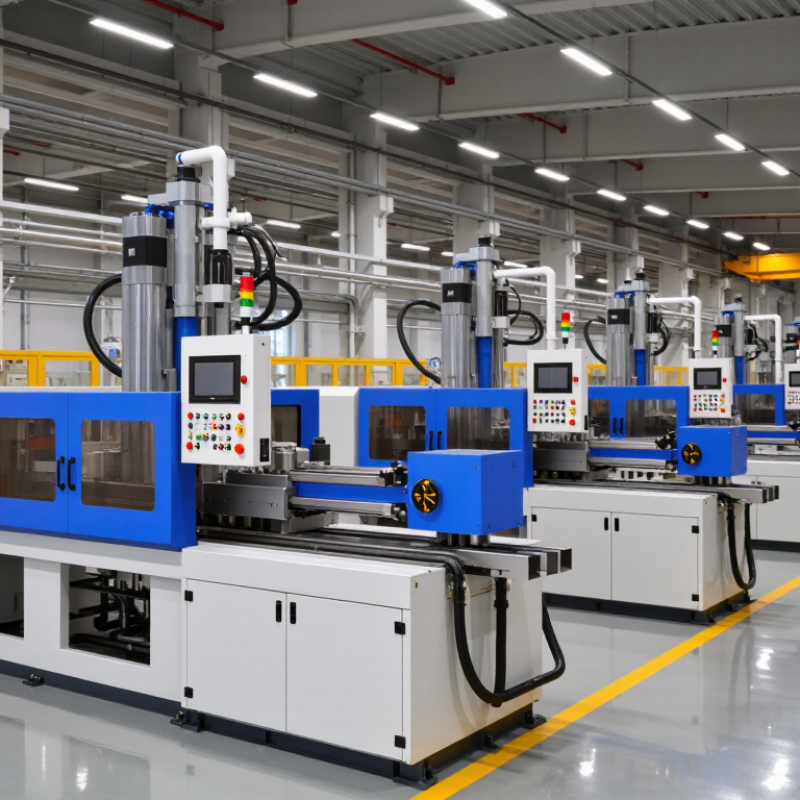
When people search for China’s top 10 plastic injection press manufacturers, they often compare machine prices first. A better question is: what does a plastic injection press manufacturer actually provide? This manufacturer designs, builds, tests, and supports equipment that melts plastic pellets and injects the material into a mold. The machine includes an injection unit, heating zones, hydraulic or electric drive, control system, and clamping mechanism.
A reliable manufacturer should understand real production conditions, not only publish impressive specifications. For example, a factory may need stable temperature control for thin automotive parts or steady clamping force for large household components. Engineers should review the mold, material, cycle time, and expected output before suggesting equipment. Some manufacturers also provide factory testing, installation guidance, operator training, spare parts, and maintenance instructions. These details matter when a machine runs beside workers every day.
Plastic Press Molding is related, but it is not always the same process as injection molding. Buyers should ask clear technical questions. Can the press control pressure accurately? How quickly can faults be diagnosed? Is the electrical system suitable for the destination market? A low price may hide weak documentation or limited service. No machine is perfect. Even experienced teams can misjudge a mold or material during early trials. Careful testing, transparent records, and honest communication make the manufacturer more trustworthy.
A plastic injection press manufacturer designs and produces machines that melt plastic pellets, inject the melt into a mold, apply clamping force during cooling, and release the finished part. The table below compares ten common press categories and the technical factors typically used when evaluating manufacturers. Company and brand names are intentionally omitted.
| No. | Press Category | Typical Clamping Force | Common Injection Materials | Typical Applications | Main Drive System | Key Evaluation Point |
|---|---|---|---|---|---|---|
| 01 | Micro Injection Press | 5–30 tonnes | ABS, PC, POM, medical-grade thermoplastics | Micro connectors, laboratory components, precision inserts | Servo-hydraulic or electric | Repeatability and low injection volume |
| 02 | Small Electric Press | 30–150 tonnes | PP, PE, ABS, PS, nylon | Electronic housings, consumer parts, small containers | All-electric servo drive | Energy efficiency and clean operation |
| 03 | Small Servo-Hydraulic Press | 50–200 tonnes | PP, ABS, HIPS, reinforced polymers | Household components, fittings, general industrial parts | Servo-hydraulic | Price-to-performance ratio |
| 04 | Medium Two-Platen Press | 200–600 tonnes | PP, PC, PA, PBT, glass-filled materials | Automotive trim, appliance parts, industrial enclosures | Hydraulic or servo-hydraulic | Compact footprint and mold access |
| 05 | Medium Toggle Press | 160–500 tonnes | PP, ABS, PC/ABS, nylon | Packaging components, consumer goods, technical parts | Servo-hydraulic | Fast cycle performance and rigidity |
| 06 | Large Structural-Foam Press | 500–1,600 tonnes | PP, PE, ABS, chemically foamed compounds | Large housings, pallets, transport and infrastructure parts | Hydraulic | Large mold capacity and uniform filling |
| 07 | High-Speed Packaging Press | 120–450 tonnes | PP, PET, PE, PS | Thin-wall containers, lids, caps and food packaging | Electric or hybrid servo system | Cycle time, acceleration and cooling efficiency |
| 08 | Vertical Insert-Molding Press | 20–300 tonnes | PA, PBT, PC, TPU, elastomer blends | Electrical connectors, metal inserts, overmolded components | Hydraulic, servo-hydraulic or electric | Insert positioning and operator access |
| 09 | Two-Color or Multi-Component Press | 160–1,000 tonnes | TPU, TPE, PP, ABS, PC/ABS and compatible combinations | Seals, grips, automotive controls and dual-material products | Servo-hydraulic or electric rotary system | Injection-unit synchronization and mold compatibility |
| 10 | Fully Electric Precision Press | 80–650 tonnes | Engineering thermoplastics and reinforced polymers | Medical devices, optical parts, electronics and precision housings | All-electric servo drive | Position accuracy, process monitoring and cleanliness |
Selection note: Actual specifications vary by machine model, mold design, resin grade, shot size, part geometry and regional safety requirements. A qualified manufacturer should provide verified clamp-force calculations, injection-unit sizing, energy data, mold dimensions, control-system details, commissioning support and applicable conformity documentation.
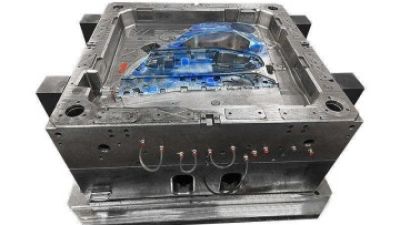
Composite materials are gaining attention in automotive light-housing production because they can combine low weight, dimensional stability, and design flexibility. For manufacturers developing headlamp, rear-lamp, and signal-lamp housings, compression moulding offers a practical solution for shaping reinforced thermoset and other composite compounds with consistent surface quality. The mould design can be configured as a single cavity, multiple cavities, or multiple cavities with interchangeable inserts, allowing production capacity and product variation to be balanced more effectively.
Mould construction may use P20, S50C, or S45 steel, depending on the required durability, machining performance, and budget. P20 is suitable for demanding production environments and can support approximately 300,000 moulding cycles when properly designed, maintained, and operated. Heating options include oil heating for stable temperature control or electrical rod heating for a compact and responsive system. These choices help maintain the processing conditions required by different composite formulations and housing geometries.
To improve productivity, the ejection system can combine hydraulic ejectors with air assistance or use hydraulic pins, helping release moulded parts while reducing the risk of deformation. The final cycle time depends on the material, part thickness, curing conditions, and mould configuration. With engineering details confirmed in advance, the mould lead time is approximately 54 days, supporting a structured development schedule for automotive lighting programmes.
They produce automotive parts, packaging, electronic housings, medical components, and household products. Applications vary by machine design.
Compare clamping force, injection accuracy, energy use, control stability, cycle time, and maintenance support. Price alone can mislead.
Hydraulic presses suit large, thick parts and provide strong clamping force. Servo-electric models offer accurate metering and lower energy use. Hybrid machines balance both.
Use your actual material settings and a similar mold. Check flash, part weight, noise, temperature stability, and cooling performance.
Short demonstrations may hide temperature drift. A long test reveals repeatability, pressure changes, and cycle-time instability. It feels less impressive, but it matters.
Small flashes, sink marks, changing shot weights, and unstable temperatures deserve attention. Inspect finished parts under bright light.
Request technical drawings, test records, maintenance details, operator training, spare-parts information, and verified quality documents. Keep every test condition documented.
Not always. Installation, mold changes, energy use, downtime, and delayed service can increase the total cost. I might still underestimate communication problems.
This guide explains what a Plastic Injection Press manufacturer does and how leading suppliers in China are evaluated. The selection process considers manufacturing experience, engineering capability, product quality, automation, energy efficiency, customization, after-sales support, and international service. It presents a practical overview of ten major types of Chinese manufacturers without focusing on brand names, helping readers understand how different suppliers serve industries such as automotive components, household products, electronics, packaging, medical equipment, and industrial parts.
The article also reviews key technologies used in modern injection presses, including servo-hydraulic systems, fully electric drives, intelligent controls, precision molding, energy-saving designs, and automated production integration. It compares machine types according to clamping force, injection speed, accuracy, operating cost, material compatibility, and application requirements. Finally, it offers guidance on choosing a suitable Chinese manufacturer by assessing production volume, product specifications, factory capabilities, quality management, technical communication, delivery arrangements, maintenance services, and long-term cooperation potential.