inquiry
Leave Your Message
0%

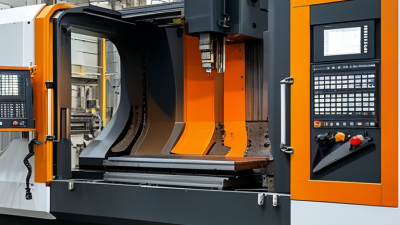
A Plastic Injection Press isn’t just a giant machine with a metal mold attached — it’s actually a pretty sophisticated system designed to turn heated plastic pellets into precise, repeatable parts. The process kicks off inside the barrel, where rotating screws move, melt, and prep the material. Then, either hydraulic or electric force pushes the molten plastic through the nozzle and into the mold cavity.

John Bozzelli, the guy who founded RJG and is a well-known injection-molding expert, often reminds us of something simple but super important: “A robust process is one that makes good parts even if there’s some normal variation.” That’s why controlling temperature, pressure, screw position, cooling time, and clamping force all at once is critical. Even a tiny tweak in one area can lead to issues like sink marks, short shots, flash, or unwanted stress in the part. When operators are working, they’re often listening to the motor, watching pressure curves, and inspecting the edges of parts—these little details really tell you how the machine is actually behaving.

Now, the basic cycle itself sounds straightforward: clamp the mold, inject the melt, hold pressure, let it cool, open the mold, and eject the part. Then, repeat. Easy, right?

Well, in real-world production, nothing’s ever perfect. Factors like moisture in the resin, room temperature, mold wear, and uneven cooling can throw things off a bit. So, a good explanation has to acknowledge these limitations. Just relying on machine specs isn’t enough to guarantee top-quality output. You need a skilled setup, documented measurements, regular preventive maintenance, and solid material knowledge. This guide will walk you through each step, but keep in mind that actual molding often involves some tweaking, testing, and sometimes questioning the first solution you come up with—because that’s just part of the process.
What Is a Plastic Injection Press and How Does It Work?

What Is a Plastic Injection Press?

A plastic injection press is a machine that melts polymer pellets and pushes the melt into a closed mold. It combines a heating barrel, injection screw, clamping unit, and control system. The mold shapes the part while cooling removes heat. It is not simply a “plastic press.” The term can confuse beginners.

On a factory floor, operators often check pellet moisture, barrel temperature, clamp force, and cycle time. A stable process produces repeatable parts, such as housings, caps, or small gears. The screw first conveys and melts the material. It then injects the melt through a narrow nozzle. The clamp keeps the mold closed against internal pressure. Cooling follows. Then, the mold opens and ejects the part.

Plastic Press Molding is a broader phrase, while injection pressing describes a specific machine process. The distinction matters when comparing equipment and production costs. Plastics Europe reported global plastics production of about 413.8 million tonnes in 2023 in its Plastics—The Fast Facts 2024 report. That scale explains the need for controlled, repeatable molding systems. Grand View Research also reported continued growth in the injection molding machine market in its 2024 industry analysis. However, market figures vary between researchers. They should not replace plant-level testing. A machine may appear efficient but waste energy through poor temperature control, excessive pressure, or long cooling periods. Small defects still reveal large process problems.

What Are the Main Parts of an Injection Press?

What Is a Plastic Injection Press and How Does It Work?

A plastic injection press combines heat, pressure, and controlled cooling. Its frame supports every moving component. The injection unit contains a hopper, barrel, reciprocating screw, heaters, and nozzle. Pellets fall through the hopper, then the screw conveys and melts them. The nozzle pushes the melt into a closed mold. According to PlasticsEurope’s Plastics—The Fast Facts 2024, global plastics production reached 413.8 million tonnes in 2023. That scale demands stable processing, not merely powerful machinery.

The clamping unit includes the fixed platen, moving platen, tie bars, and mold mechanism. It keeps the mold faces aligned during filling. Even a small alignment error can create flash along the parting line. Hydraulic or electric drives move the platens and screw. Sensors track pressure, position, temperature, and cycle time. The control system adjusts these values, although operators still need practical judgment. A sensor can report a stable temperature while material degradation has already started.

The mold itself contains cavities, cores, gates, runners, cooling channels, and ejector pins. Cooling channels remove heat before the mold opens. Ejector pins then release the molded part without damaging its edges. A 2024 market analysis by Grand View Research identifies automation and energy efficiency as major injection-molding trends. Press Forming Plastic is therefore more than forcing resin into steel. It requires coordinated movement, thermal control, and inspection. The process is never perfectly self-correcting.

What Is a Plastic Injection Press and How Does It Work? – What Are the Main Parts of an Injection Press?

Main Part Primary Function How It Works Typical Data or Range Important Operating Considerations
Injection Press A machine that melts plastic pellets and forces the molten material into a mold to produce a finished part. The machine plasticizes resin, injects it into a closed mold, applies holding pressure, cools the part, and ejects it. Common machine sizes range from approximately 20 to more than 4,000 tons of clamping force. Machine size must match the mold size, projected part area, material, shot volume, and required production rate.
Clamping Unit Closes, holds, and opens the mold during the molding cycle. A toggle, hydraulic, or direct-drive mechanism moves the moving platen and maintains enough force to keep the mold closed during injection. Clamping force is commonly specified in tons or kilonewtons; 1 metric ton-force is approximately 9.81 kN. Insufficient clamping force can cause flash, while excessive force may increase mold wear and energy use.
Fixed Platen Supports the stationary half of the mold and provides a mounting surface for the injection unit. The mold’s stationary half is bolted to the platen, and the platen transfers injection and clamping loads into the machine frame. Includes mounting holes, a locating ring area, and a central opening for the injection nozzle. Platen flatness, alignment, and mounting-hole compatibility are essential for reliable mold installation.
Moving Platen Supports and moves the movable half of the mold. It travels along tie bars or linear guides to close the mold, maintain pressure, and open the mold for part removal. Maximum mold height and daylight determine the mold sizes that can be installed. Uneven movement or platen deflection can produce inconsistent part thickness and mold alignment problems.
Tie Bars Guide the moving platen and carry the tensile load created by clamping force. Four tie bars are commonly arranged around the mold area and stretch slightly as clamping force is applied. Tie-bar spacing limits the maximum mold width and height that can pass between the bars. Correct tie-bar lubrication, alignment, and load distribution help prevent premature wear.
Mold Shapes the molten plastic into the required product geometry. Molten resin enters the cavity through the sprue, runners, and gates; cooling channels remove heat before the mold opens. A mold may contain one or multiple cavities, depending on part size, production volume, and tooling cost. Mold design affects filling balance, cooling time, warpage, surface finish, and overall cycle time.
Injection Unit Melts, meters, and injects plastic into the mold. The unit combines a heated barrel, reciprocating screw, nozzle, and drive system to prepare and deliver the shot. Screw diameters and shot capacities vary widely according to machine size and material requirements. The injection unit must provide sufficient shot volume, injection pressure, injection speed, and plasticizing capacity.
Hopper Stores and feeds plastic pellets into the injection unit. Gravity moves pellets from the hopper into the rear section of the rotating screw. Hopper capacity is commonly measured in kilograms or liters. Material should be clean, properly dried when required, and protected from moisture and contamination.
Reciprocating Screw Conveys, melts, mixes, and injects the plastic material. During screw recovery, the screw rotates and moves backward while building the next shot; during injection, it moves forward as a plunger. The screw typically includes feed, transition, and metering sections with a compression ratio suited to the resin. Screw design, back pressure, rotation speed, and residence time influence melt quality and color consistency.
Heated Barrel Transfers heat to the plastic and contains the reciprocating screw. External heater bands raise the barrel temperature, while screw shear contributes additional heat during plasticizing. Barrels usually have several independently controlled heating zones plus a separate nozzle zone. Temperature settings should follow the material supplier’s processing window and be verified with actual melt conditions.
Nozzle Connects the heated barrel to the mold sprue and directs molten plastic into the mold. The nozzle seals against the mold during injection and holding pressure, then retracts or remains positioned according to the machine design. Nozzle tip shape, radius, orifice size, and length must match the mold sprue bushing. Poor alignment or an incorrect nozzle fit can cause leakage, pressure loss, stringing, or mold damage.
Hydraulic or Electric Drive System Provides motion and force for injection, screw rotation, clamping, and auxiliary functions. Hydraulic machines use pumps, valves, and cylinders; electric machines use servo motors, drives, and mechanical transmissions. Some presses use a combination of both. Electric systems generally offer precise motion control and reduced idle energy use; hydraulic systems provide robust force generation. Energy consumption, maintenance requirements, speed control, and application needs should guide system selection.
Pressure and Position Sensors Measure key process conditions and machine positions. Sensors provide feedback for injection pressure, screw position, mold position, clamp force, and other control variables. Common controlled variables include injection pressure, screw position, velocity, and cushion. Accurate calibration is necessary for repeatable filling, packing, cycle monitoring, and quality control.
Control System Coordinates the machine sequence and stores processing settings. The controller uses programmed limits and sensor feedback to manage mold movement, injection, holding, cooling, screw recovery, and ejection. A complete cycle commonly includes mold close, injection, hold, cooling, screw recovery, mold open, and ejection. Interlocks prevent operation when doors are open, the mold is not ready, or unsafe pressure and temperature conditions exist.
Ejector System Removes the cooled part and runner system from the mold. Ejector pins, sleeves, or plates move forward after mold opening and push the molded part away from the core side. Ejection stroke and force must be sufficient for the part geometry without marking or deforming the product. Balanced ejection and suitable draft angles help prevent sticking, distortion, and mold damage.
Cooling System Removes heat from the mold and solidifies the molded part. Temperature-controlled water or another approved fluid circulates through mold channels and machine heat exchangers. Cooling time often represents a significant portion of the total molding cycle. Stable flow, clean channels, and consistent coolant temperature improve dimensional stability and reduce warpage.
Safety Guarding and Interlocks Protect operators from moving mechanisms, hot surfaces, and high-pressure material. Physical guards, safety doors, emergency stops, and interlock switches prevent or stop hazardous machine movement. Safety systems are designed to stop hazardous motion when access doors are opened or an emergency stop is activated. Guards and interlocks must never be bypassed; maintenance should follow the applicable workplace safety procedures.

How Does the Injection Molding Process Begin?

An Injection Mold Press begins with material preparation, not the mold itself. Plastic pellets are checked for moisture, color, and contamination before entering the hopper. Some engineering plastics need controlled drying because trapped moisture can create bubbles or weak surfaces.

Inside the barrel, heaters warm the pellets while a rotating screw carries them forward. Friction adds heat, but operators must not rely on friction alone. Temperature sensors monitor several zones along the barrel. The screw gradually melts and mixes the material into a consistent plastic flow. At this stage, incorrect heat or speed can cause degradation, uneven color, or black specks.

The mold then closes under controlled clamping force. The screw moves forward and pushes the molten plastic through the nozzle and into the cavity. Pressure fills narrow features, ribs, and textured surfaces. The first cycle is rarely perfect. A technician may find short shots, flash, or slight warping and adjust pressure, speed, or cooling time. Small changes matter. After filling, the machine holds pressure while the plastic shrinks during cooling. Once the part is firm enough, the mold opens and ejector pins release it. Careful operators inspect the first pieces by touch, measurement, and visual checks before continuing production.

What Is a Plastic Injection Press and How Does It Work?

How Does the Injection Molding Process Begin?

This chart shows a representative 30-second thermoplastic injection molding cycle. The process begins when the press closes and clamps the mold. The screw then injects molten plastic into the cavity, applies holding pressure to compensate for shrinkage, and allows the part to cool before the mold opens and the finished component is ejected. Cooling commonly takes the largest share of the cycle.

How Does Plastic Melt and Fill the Mold?

What Is a Plastic Injection Press and How Does It Work?

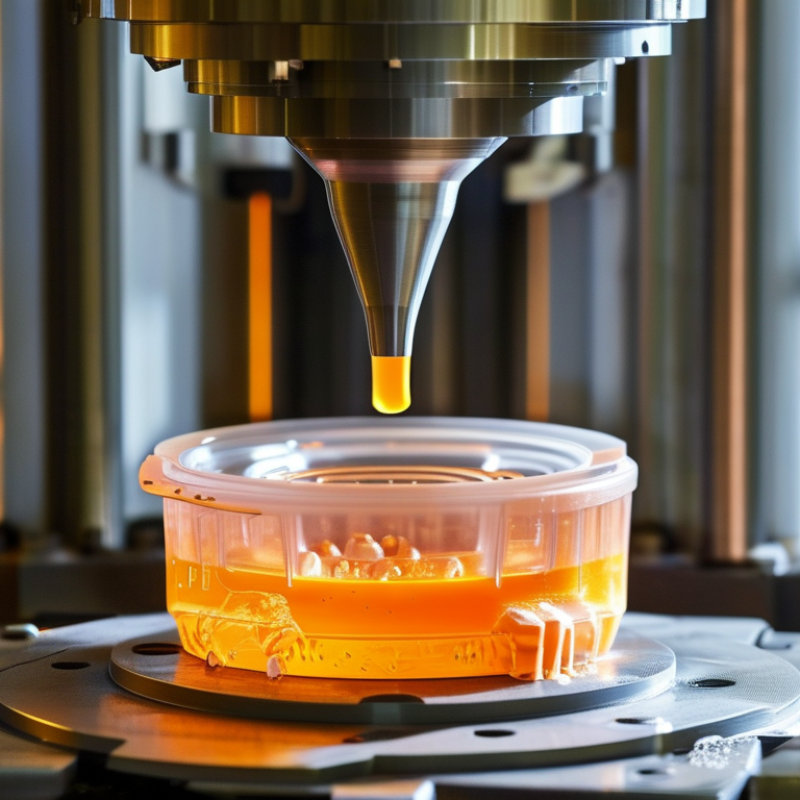
A plastic injection press converts solid pellets into precise molded parts. The process begins inside a heated barrel. A rotating screw carries pellets forward while heater bands and friction soften them. The screw then pushes the molten plastic through a narrow nozzle. It enters the mold through a gate under controlled pressure.

Filling the mold is not simply “pushing plastic in.” Melt temperature, injection speed, pressure, and mold temperature must work together. A faster flow can reduce premature freezing, but it may create burn marks or trapped air. A colder mold can shorten cooling time, yet it may leave visible weld lines. The OECD’s Global Plastics Outlook reported 353 million tonnes of plastic waste in 2019. That scale makes efficient processing important, although waste reduction begins with better part design. The result is never perfectly predictable. Resin moisture, tiny temperature changes, or worn tooling can alter the fill pattern. Experienced operators check pressure curves and inspect the first molded parts before production continues.

Tips: Dry moisture-sensitive pellets before processing. Keep the nozzle aligned with the sprue. Watch for short shots, silver streaks, and uneven gloss. These defects often reveal unstable melting or filling. Do not trust temperature settings alone; confirm the actual melt condition.

How Does the Press Cool and Release the Product?

A Molding Press shapes molten plastic inside a closed mold. Cooling then determines whether the product keeps its intended dimensions. Industry studies commonly estimate that cooling uses about 50–70% of the injection cycle. This range is reported in technical reviews published by the Society of Plastics Engineers. It explains why cooling design deserves more attention than it often receives.

Pressurized water flows through channels near the mold cavity. It removes heat from the plastic and stabilizes the mold surface. Sensors monitor coolant temperature, flow rate, and pressure. A practical target is often a small temperature difference across the mold. Large differences can create sink marks, warpage, or uneven gloss. The Plastics Industry Association’s 2024 industry data also highlights energy efficiency as a continuing manufacturing priority. Better cooling can shorten cycles, but faster is not always better. I have seen parts released too early, with edges still slightly soft.

When the part reaches its release temperature, the mold opens. Ejector pins push against reinforced areas, not delicate surfaces. Air-assisted release may help, but poor draft angles still cause sticking. The pins retract before the next shot. This movement must remain smooth and repeatable.

Tips: Check coolant flow at every shift. Clean blocked channels. Measure part temperature, not only water temperature. Record warpage results, because one successful cycle proves very little. A small design change can disturb the entire thermal balance.

What Factors Affect Injection Press Performance?

What Is a Plastic Injection Press and How Does It Work?

What Factors Affect Injection Press Performance?

A plastic injection press melts pellets, injects the melt into a mold, and holds pressure during cooling. Its performance depends on the whole process, not only the machine’s rated tonnage. Clamp force must resist cavity pressure without creating flash. Injection speed affects filling, weld lines, and surface appearance. A 500-ton press can still produce unstable parts when its pressure profile is poorly adjusted.

Material preparation is equally important. Moisture, inconsistent pellet size, and recycled-content variation can change viscosity within a single production shift. Barrel temperature should be checked at the actual heater zones, not trusted blindly. Mold temperature and cooling flow also control cycle time. EUROMAP energy-measurement guidance recommends tracking electricity in kilowatt-hours per kilogram, which helps compare presses under similar conditions. The comparison is imperfect when parts have different wall thicknesses.

Maintenance often decides whether performance remains repeatable. Worn check rings, leaking hydraulic seals, blocked filters, or a dirty hopper can create pressure loss and longer cycles. The U.S. Department of Energy reports that compressed-air leaks may waste 20–30% of compressor output, although the exact loss varies by system. This figure is easy to overlook.

Operators should record peak pressure, cushion, melt temperature, cycle time, and reject rate together. One number rarely explains the problem. Humidity, mold wear, and operator habits can quietly distort otherwise useful data.

Plastic Injection Auto Spare Parts Mold: Market Insights from Grand View Research and Fortune Business Insights Reports

The global plastic injection molding market is gaining momentum alongside automotive lightweighting, vehicle production, and demand for precise replacement components. Recent industry reports estimate the market in the tens of billions of U.S. dollars and project a mid-single-digit compound annual growth rate through 2030, with automotive applications remaining a major demand contributor. This expansion is increasing the need for durable molds that support dimensional accuracy, repeatable production, and efficient maintenance for auto spare parts.

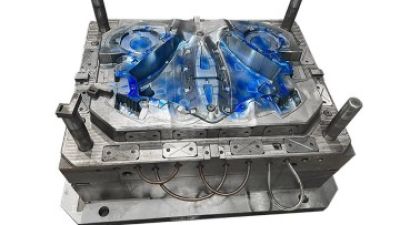
For these requirements, a compression mold configuration can be produced with P20, S50C, or S45 steel, depending on production volume, surface demands, and budget. Customers may select a single cavity, multiple cavities, or multiple cavities with interchangeable inserts for greater flexibility across part variations. Oil heating or electrical-rod heating systems can be integrated according to temperature-control needs, while hydraulic ejection with air assist or hydraulic pins helps achieve stable and reliable demolding. Mold cycle performance depends on the selected steel; P20 can support approximately 300,000 cycles under suitable operating and maintenance conditions. The expected lead time is 53 days, supporting planned tooling development for automotive aftermarket and replacement-part programs.

FAQS

What is a plastic injection press?

It melts polymer pellets and injects the melt into a closed mold. The machine uses a heated barrel, screw, nozzle, clamp, and control system. Cooling hardens the part before ejection.

How does a plastic injection press work?

The screw carries pellets forward while heat and friction soften them. The molten material passes through a narrow nozzle and enters the mold. The clamp holds the mold shut. Then cooling begins.

How does plastic fill the mold?

Injection pressure pushes the melt through the gate and into each cavity. Flow speed, melt temperature, mold temperature, and pressure must work together. Fast filling can prevent freezing. It can also create burn marks.

Which materials can an injection press process?

It can process many thermoplastic materials in pellet form. Each material needs suitable drying, temperature, pressure, and cooling settings. Moisture-sensitive pellets may create silver streaks or weak areas. Material changes are easy to underestimate.

What factors affect press performance?

Clamp force, injection speed, pressure, temperature, and cooling flow all matter. Material moisture and pellet consistency also affect viscosity. A large press can still produce unstable parts. Tonnage alone proves little.

How can operators identify molding defects?

Short shots suggest incomplete filling or insufficient pressure. Silver streaks may indicate moisture or unstable melting. Uneven gloss can reveal inconsistent cooling. Small defects matter.

What maintenance does an injection press need?

Operators should inspect check rings, hydraulic seals, filters, heaters, and the hopper. Blocked filters can reduce pressure and extend cycle times. Dirty equipment can quietly damage repeatability. Records help reveal gradual changes.

How can energy use be evaluated?

Track electricity in kilowatt-hours per kilogram of molded material. Compare similar parts with similar wall thicknesses and cycle conditions. Long cooling periods may waste energy. The comparison is never perfect.

Why should operators inspect the first molded parts?

Initial parts reveal filling, flash, weld lines, warping, and surface problems. Operators should check pressure curves and actual melt conditions. A displayed temperature may not match the material. Settings can look correct and still fail.

Conclusion

A Plastic Injection Press is a machine that transforms plastic pellets into precise molded parts by heating, injecting, and shaping the material inside a mold. Its main components include the injection unit, heated barrel, screw, hopper, mold, clamping unit, and control system. The process begins when plastic pellets enter the hopper and move through the barrel. As the screw rotates, controlled heat and pressure melt the plastic into a consistent, workable material.

The molten plastic is then injected into a closed mold, where it fills the cavity and takes its required shape. After injection, the material is held under pressure while it cools and solidifies. The mold opens, and an ejector system releases the finished product for inspection or further processing. Press performance depends on factors such as temperature accuracy, injection speed, pressure stability, mold design, cooling efficiency, material quality, and regular maintenance. Proper coordination of these elements helps improve production speed, product consistency, energy use, and overall operational reliability.
Ethan

Ethan

Ethan is a dedicated marketing professional at Taizhou Chenlin Plastic Mould Co., Ltd., a company specializing in the design and manufacturing of thermosetting composite moulds and injection moulds. With a strong commitment to precision and quality, he ensures that every aspect of the production......
Previous China Best Mold Maker Tools for Global Buyers