inquiry
Leave Your Message
0%

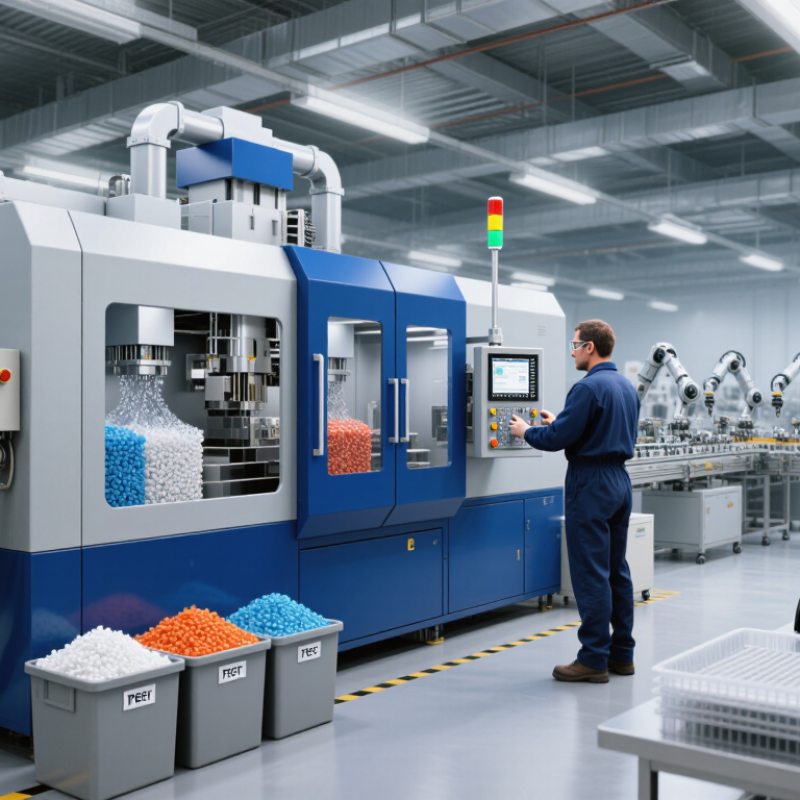
Honestly, picking Plastic Manufacturing Equipment isn't just a purchasing task. It's a production decision. The machine has to fit your resin, your product geometry, your output goals, and whatever local service you can actually rely on. Fortune Business Insights put the global plastics processing machinery market at roughly USD 38.71 billion in 2023, and it expects growth to keep going through 2032—mostly pushed by packaging, automotive, medical, and construction. Demand is up. Mistakes? Still expensive.

A practical place to start is the material. Polypropylene, ABS, PET, and recycled blends don't all behave the same. They need different temperature control, screw designs, drying systems, and maintenance routines. PET, for instance, is moisture-sensitive, so it may need a dependable dehumidifying dryer before injection molding. And if you're running a high-speed packaging line, stable cycle times, accurate dosing, and spare parts you can get to matter a lot. Check specs against real production trials, not just a glossy brochure. ISO 20430 gives useful guidance for injection molding machine safety. Compliance helps, sure—but it doesn't guarantee efficient production.

Energy deserves just as much attention. The International Energy Agency calls energy efficiency a major factor in cutting industrial emissions. Variable-speed drives, better heaters, and cooling systems that actually work can lower operating costs over the years. That said, don't just trust supplier claims—get independent testing. A spreadsheet won't capture every factory delay either. No choice is perfect. Engineers should compare total cost of ownership: downtime, labor, tooling, utilities, training, disposal, all of it. Grand View Research also flags sustainability and recycled materials as big trends in plastics. So the strongest pick balances throughput with repeatability, safety, service support, and measurable environmental performance. This guide walks through how to compare Plastic Manufacturing Equipment using evidence, practical checks, and a little room to reconsider when something doesn't add up.
How to Choose Plastic Manufacturing Equipment?

Define the Production Requirements and Material Characteristics

Choosing Plastic Equipment starts with defining the production requirement, not browsing machine catalogs. Record target output, cycle time, part dimensions, tolerance, annual operating hours, and available floor space. A 500-gram component needs different capacity from a thin medical tray. Confirm utility limits too, including electrical load, cooling water, compressed air, and ventilation.

Material characteristics can change the decision completely. Check melt flow rate, moisture sensitivity, shrinkage, thermal stability, filler content, and required drying conditions. Glass-filled compounds may increase screw and barrel wear. Recycled feedstock can vary in color, moisture, and viscosity. The OECD’s Global Plastics Outlook reports that only about 9% of plastic waste was recycled globally in 2019. That figure makes incoming-material control essential. PlasticsEurope’s Plastics—The Fast Facts 2024 reports global plastic production of 413.8 million tonnes in 2023, showing the scale and diversity of modern processing needs.

Match the machine to the material’s processing window. Test the actual resin, not only a supplier’s datasheet. Measure melt temperature, injection pressure, cycle stability, scrap rate, and energy use per kilogram. A pilot run reveals practical problems, such as bridging in a hopper or uneven cooling near a thick rib. Real factories are less tidy. A first estimate may be wrong. Recheck it before purchase. When requirements remain unclear, choose flexibility carefully, because unnecessary capacity can increase cost, floor usage, and energy consumption.

Compare Plastic Manufacturing Processes and Equipment Types

Choosing Plastic Machinery Equipment starts with the part, not the machine catalog. Injection molding suits repeatable, detailed parts with tight tolerances. Extrusion works better for continuous profiles, film, sheet, and pipe. Blow molding forms hollow containers, while thermoforming shapes heated sheet over a tool. Rotational molding handles large hollow parts, but cycle times are usually longer.

Scale changes the decision. PlasticsEurope’s Plastics—The Fast Facts 2023 reports 400.3 million tonnes of global plastics production in 2022. That volume hides very different production needs. High-volume parts may justify injection presses with automated handling. Lower volumes may favor thermoforming and cheaper tooling. However, trimming can add labor. The OECD’s Global Plastics Outlook estimates 353 million tonnes of plastic waste in 2019, with only 9% recycled. This should influence resin handling, scrap recovery, and equipment controls.

Check melt temperature, clamping force, shot size, line speed, cooling capacity, and maintenance access. An extruder may look affordable until power demand and die changes are measured. Ask operators to inspect a test run. Watch warpage, flash, wall thickness, and rejected parts. My first capacity estimate is often too optimistic. Real production data is humbling. Select equipment that records energy, downtime, and material loss by batch. Those records support better decisions than impressive brochure numbers.

How to Choose Plastic Manufacturing Equipment? - Compare Plastic Manufacturing Processes and Equipment Types

Manufacturing Process Typical Equipment Common Materials Typical Production Volume Part Characteristics Main Advantages Key Limitations and Selection Factors
Injection Molding Injection molding machine, mold, hopper dryer, temperature controller, chiller, and material loader PP ABS PE PA PC POM Medium to very high; suitable for thousands to millions of identical parts Small to medium parts, complex geometries, thin walls, ribs, bosses, snap-fits, and tight repeatability Fast cycle times, excellent repeatability, low unit cost at high volume, and the ability to produce complex shapes with integrated features High initial mold cost; design changes can be expensive after tooling is completed. Requires careful control of clamping force, injection pressure, cooling, shrinkage, and material drying.
Plastic Extrusion Single-screw or twin-screw extruder, die, calibrator, cooling tank, haul-off unit, and cut-off or winding system PE PP PVC ABS TPU Continuous production; medium to very high output depending on line size and profile Continuous products such as pipes, tubing, sheets, films, profiles, wire insulation, and filament Efficient for long, constant cross-sections; continuous operation; relatively low tooling cost compared with injection molding Limited to constant or slowly changing cross-sections. Die design, melt temperature, cooling rate, haul-off speed, and material rheology strongly affect dimensional accuracy.
Blow Molding Extrusion blow molding, injection blow molding, or stretch blow molding machine with mold, air compressor, and cooling system HDPE PET PP PVC Medium to very high; widely used for repeated hollow containers and technical parts Hollow parts such as bottles, tanks, ducts, drums, and containers; generally requires controlled wall distribution Efficient production of hollow shapes, relatively low part weight, and competitive cycle times for container applications Not ideal for solid or highly intricate parts. Wall thickness variation, pinch-off design, parison control, mold cooling, and compressed-air capacity must be evaluated.
Thermoforming Sheet extruder or sheet feeder, heating oven, vacuum or pressure-forming machine, mold, and trimming equipment ABS HIPS PETG PVC PP Low to high; especially practical for prototypes, medium runs, and large parts Large, thin-walled parts such as trays, packaging, interior panels, appliance liners, and equipment covers Lower tooling cost than injection molding, short development time, and economical production of large surface-area parts Material distribution can vary over the part. Trimming is often required, and deep draws, sharp corners, undercuts, and tight tolerances may require specialized tooling or pressure forming.
Rotational Molding Rotational molding oven, multi-arm indexing machine, hollow mold, cooling station, and loading equipment LLDPE HDPE PVC PA Low to medium; suitable for relatively large parts and moderate quantities Large, hollow, seamless parts such as tanks, bins, playground components, kayaks, and housings Low-cost molds, low residual stress, seamless hollow construction, and the ability to produce large parts with inserts or complex external contours Longer cycle times and generally lower dimensional precision than injection molding. Wall thickness depends on powder distribution, heating, mold rotation, and cooling conditions.
Compression Molding Hydraulic or servo-hydraulic compression press, heated mold, charge-preforming equipment, and flash-trimming system SMC BMC Thermosets Rubber TPU Low to high; selected for medium and high volumes of thermoset or composite components Medium to large parts, composite panels, electrical components, automotive structures, and parts requiring good strength or heat resistance Suitable for thermoset materials and fiber-reinforced compounds; relatively low material waste and good structural performance Longer molding cycles than many thermoplastic injection applications. Flash, charge placement, mold temperature, pressure, and cure time must be controlled.
Plastic CNC Machining CNC milling machine, CNC lathe, cutting tools, workholding fixtures, and inspection equipment POM PA PEEK PTFE PMMA Prototype to low volume; also used for specialized or high-value components Solid or semi-solid parts with precise features, complex machining surfaces, and no requirement for a molding tool Fast design changes, no mold investment, high dimensional control, and broad material flexibility Material waste is higher than near-net-shape processes, cycle time increases with part complexity, and production cost is usually less competitive for large quantities.
Additive Manufacturing Fused filament fabrication, stereolithography, selective laser sintering, or material-jetting printer with slicing software and post-processing tools PLA ABS Nylon Resins TPU Prototype to low volume; suitable for customized or frequently modified parts Complex internal channels, lattice structures, customized components, prototypes, jigs, fixtures, and design-verification models Minimal tooling, rapid iteration, high design freedom, and economical production of customized parts or small batches Surface finish, anisotropic strength, build size, dimensional accuracy, and post-processing requirements vary by technology. Unit cost can remain high at larger volumes.

Selection should be based on part geometry, material behavior, annual volume, dimensional requirements, tooling budget, cycle time, labor availability, energy consumption, automation needs, and required certifications. Actual performance varies with machine size, mold or die design, material grade, process settings, and quality-control practices.

Evaluate Machine Capacity, Precision, and Automation Features

How to Choose Plastic Manufacturing Equipment?

Choosing plastic manufacturing equipment starts with the part, not the machine catalog. Measure shot weight, mold dimensions, cycle time, material drying needs, and expected output. A 250-ton press may sound sufficient, yet clamp force alone does not confirm suitability. Leave practical capacity headroom, often 10 to 20 percent, for process variation and future molds. I have seen production plans fail when engineers calculated average demand instead of peak demand.

Peak demand matters.

Precision should be tested against the part’s actual tolerances. Review repeatability, injection pressure control, temperature stability, and platen parallelism. Ask for sample runs using comparable resin and mold geometry. Inspect dimensions across several cycles, not one perfect sample. A good trial records settings, room temperature, cooling time, and rejected pieces. This evidence is more useful than a polished sales claim. Still, one trial is not final proof; maintenance condition can distort the result.

Automation can reduce handling errors, but it also adds sensors, software, and training demands. Check whether robots, material loaders, vision checks, and data logging fit your workflow. Confirm changeover time and manual override procedures before purchase. A fast robot is not automatically productive if operators wait for its reset. I prefer clear alarms, accessible controls, and spare-part availability. The uncomfortable question is whether the factory can support the system every shift. Sometimes, simpler equipment delivers steadier output because fewer features are ignored.

Assess Energy Use, Maintenance Needs, and Operating Costs

Choosing Plastic Injection Molding Equipment requires more than comparing purchase prices. Energy use, maintenance workload, and daily operating costs often determine the real return.

The International Energy Agency reports that electric motor systems consume roughly half of global electricity. Injection units, pumps, heaters, and cooling systems therefore deserve close measurement. Compare kilowatt-hours per kilogram of finished parts, not only the machine’s rated power. A 2023 energy audit might reveal that an oversized hydraulic pump runs loudly during every cycle, even when demand is low. It feels powerful. It may also waste electricity. Record energy during startup, production, and idle periods.

Maintenance costs need equal attention. Check oil filtration, heater bands, seals, sensors, and mold-change access before purchasing. The U.S. Department of Energy’s Improving Compressed Air System Performance report notes that leaks can waste 20–30% of compressor output in poorly maintained systems. That figure is not universal. Your plant may perform better, or worse. Ask for service intervals, spare-part availability, and documented failure rates. A five-minute filter inspection can prevent hours of unplanned downtime.

Build an operating-cost sheet using labor, electricity, cooling water, lubrication, scrap, and scheduled repairs. The European Commission’s Best Available Techniques Reference Document for Polymers Production emphasizes that process efficiency depends strongly on equipment design and operating conditions. My cost models would not trust catalog figures alone. Measure actual cycle energy and reject rates from comparable production. A cheaper machine can become expensive when temperature drift creates cloudy parts, extra trimming, and repeated setup adjustments.

Check Safety Standards, Compatibility, and Supplier Support

Choosing Mould Equipment should begin with safety, not cycle speed. The International Labour Organization reported 2.93 million work-related deaths and 395 million non-fatal injuries annually. That figure makes guarding, interlocks, emergency stops, and operator training practical priorities.

Check whether the equipment follows ISO 12100 risk-assessment principles and ISO 13849-1 for safety-related control systems. Electrical installations should also align with IEC 60204-1. Ask for test records, conformity documents, and maintenance instructions. Do not accept vague promises. A missing safety file can delay installation and expose workers to avoidable hazards.

Compatibility requires close attention. Match the mould, resin, clamping force, injection pressure, temperature range, and available floor space. Plastics production reached about 413.8 million tonnes in 2023, according to PlasticsEurope’s Plastics—The Fast Facts 2024 report. That scale increases pressure for efficient, flexible equipment, but higher output does not excuse poor integration. Check controller communication, cooling connections, material drying needs, and power demand before signing.

Supplier support matters after delivery. Request response-time targets, spare-parts availability, commissioning support, and technician training. Try a realistic sample run. Watch the mould close, inspect the first parts, and record temperature stability. I have seen specifications look perfect on paper while the interface confused operators. That deserves honest reconsideration.

Select Equipment Based on Budget, Scalability, and Long-Term Value

How to Choose Plastic Manufacturing Equipment?

Select Equipment Based on Budget, Scalability, and Long-Term Value

A low purchase price can hide expensive maintenance, energy use, and production delays. I have seen small processors choose compact machines, then outgrow them within eighteen months. Measure your real output needs, not your most optimistic sales forecast. Include tooling, installation, operator training, spare parts, and floor preparation in the budget. Leave room for unexpected repairs. They happen.

Compare equipment by usable capacity and cost per finished part. A machine that produces 500 units per hour may seem attractive, but frequent changeovers can reduce actual output. Ask for cycle-time data using similar materials, molds, and product dimensions. Check power requirements, cooling demand, noise levels, and ventilation needs before signing an order. A detailed site survey prevents costly surprises.

Scalability deserves careful attention. Modular controls, replaceable components, and adaptable molds can support future products without forcing a complete replacement. However, buying oversized equipment too early may trap capital and increase operating costs. Review realistic growth targets for three to five years. Discuss service response times, documentation quality, and technician availability with the supplier. These details often matter more than a polished demonstration. Request a test run with your material and sample design. A promising trial can still reveal feeding problems, surface defects, or unstable temperatures. That is useful evidence, not failure. Keep written records of every assumption, because equipment decisions made from memory become difficult to defend.

This planning benchmark compares common equipment strategies using a normalized 0–100 index. A higher budget-fit score indicates lower initial investment, while higher scalability and long-term-value scores indicate stronger expansion potential and better lifecycle economics. Automated and modular systems generally require more upfront capital but can reduce labor dependency and support higher production volumes over time.

FAQS

What information should be defined before choosing plastic processing equipment?

Record output, cycle time, part size, tolerance, yearly hours, and available floor space. A 500-gram part needs different capacity from a thin tray. Also check power, cooling water, compressed air, and ventilation limits.

Why do material characteristics affect equipment selection?

Melt flow, moisture, shrinkage, thermal stability, and fillers change processing behavior. Glass-filled materials may increase screw and barrel wear. Recycled material can vary in color, moisture, and viscosity.

Should the actual resin be tested before purchase?

Yes. Test the real resin, not only a technical datasheet. Measure melt temperature, injection pressure, cycle stability, scrap rate, and energy use. A pilot run may reveal hopper bridging or uneven cooling near a thick rib.

How can energy use be compared fairly?

Compare kilowatt-hours per kilogram of finished parts. Do not rely only on rated machine power. Record startup, production, and idle consumption. An oversized pump may sound powerful but waste electricity.

Which maintenance details deserve attention?

Check oil filtration, heater bands, seals, sensors, and mould-change access. Ask about service intervals, spare parts, and documented failure rates. A short filter inspection can prevent long downtime. Sometimes, small checks matter more.

How should operating costs be estimated?

Include labor, electricity, cooling water, lubrication, scrap, and scheduled repairs. Use data from comparable production when possible. Catalog figures may look precise but still mislead. I would recheck every estimate.

What safety features should equipment include?

Look for guarding, interlocks, emergency stops, and clear operator training. Request risk-assessment records, safety documents, electrical information, and maintenance instructions. Do not accept vague promises. A missing file can delay installation.

How can mould and machine compatibility be confirmed?

Match the mould, resin, clamping force, injection pressure, temperature range, and floor space. Check controller communication, cooling connections, drying requirements, and power demand. Run a realistic sample before signing. Paper compatibility is not enough.

What support should be expected after delivery?

Request response-time targets, spare-parts availability, commissioning help, and technician training. Observe the mould closing and inspect the first parts. Record temperature stability and operator feedback. The interface may confuse people. That matters.

Conclusion

Choosing the right Plastic Manufacturing Equipment begins with a clear understanding of production requirements, including product design, output volume, material properties, and quality expectations. Manufacturers should compare suitable processes and equipment types, then evaluate machine capacity, dimensional precision, cycle times, and automation options to ensure consistent and efficient production. The selected equipment should match the characteristics of the plastics being processed and support the desired level of flexibility.

Beyond initial performance, it is important to assess energy consumption, maintenance requirements, operating costs, safety standards, and compatibility with existing facilities. Reliable supplier support, training, spare parts availability, and technical service can also affect long-term productivity. Finally, purchasing decisions should balance the available budget with future expansion plans, scalability, and total ownership value. A well-planned investment can improve product quality, reduce downtime, control operating expenses, and provide a dependable foundation for sustainable manufacturing growth.
Clara

Clara

Clara is a dedicated marketing professional at Taizhou Chenlin Plastic Mould Co., Ltd., a company renowned for its expertise in the design and manufacturing of thermosetting composite moulds and injection moulds. With a strong commitment to precision and quality, she plays a crucial role in......
Previous How to Choose the Right Moulding Die for Your Product?