86-13511478976


Picking the right Press Molding Machine really starts with understanding your product, not just flipping through a fancy brochure. For example, a compact electrical housing, a thick rubber seal, and a composite panel all place very different demands on your production line. So, when you're comparing machines, it’s important to consider things like the molding material, part sizes, quote your expected output, and the space you've got available in the factory. Tiny details matter — a narrow loading area or limited power supply can end up being just as critical as the machine’s rated pressure level.
In this guide, I’ll walk you through the most common types of press molding machines used worldwide in 2026 — like hydraulic, mechanical, and some specialized setups. I’ll explain how each type's working principles impact cycle times, pressure control, tooling requirements, and maintenance routines. While these specs are important, keep in mind that having the right numbers doesn’t always mean your parts will come out perfect every time. It’s a good idea to ask your suppliers for test results using realistic materials and molds, and make sure you’re clear on what’s included in their quotes. Seeing a machine run with a sample can help spot issues that you might not catch just from catalogs.
And hey, real-world experience also teaches us a lot — sometimes more than specs do. The largest machine out there isn’t always the best choice. You and your team need controls that are easy to operate, technicians need accessible service points, and you need honest info about spare parts and support. When you’re making a decision, weigh all these factors against the price and your production goals. Of course, every factory is unique, so don’t rely solely on a generic guide — do your own assessment. Use these sections to narrow down your options, then check real machines, utilities, and operator skills before making a final call. A few simple checks can save you from costly mistakes down the line.
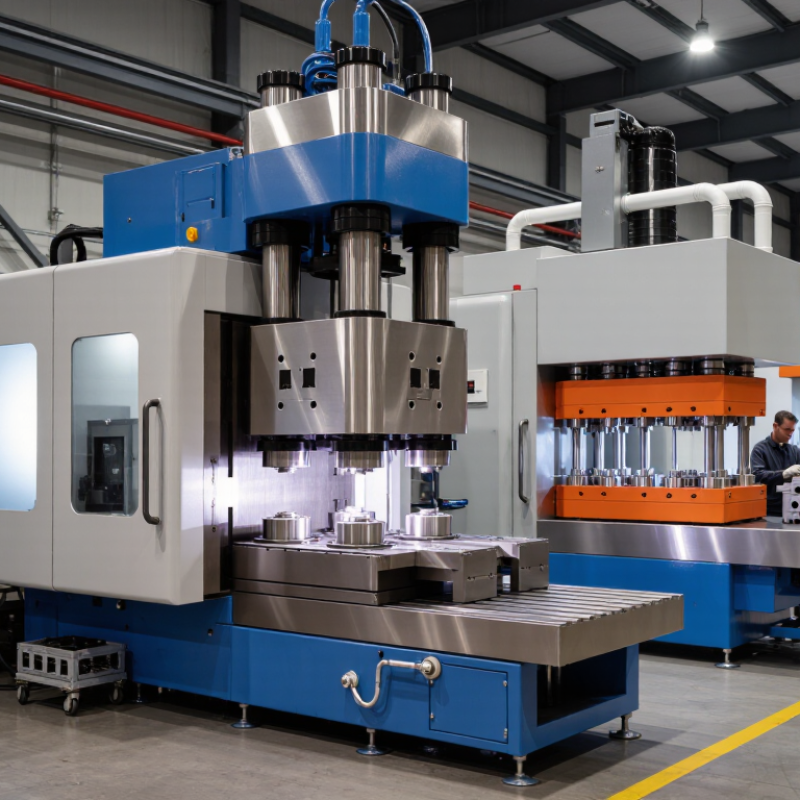
2026 Top Press Molding Machine Types for Global Buyers
2026 Press Molding Machine Classes by Force: 100–10,000 kN
Press molding machines span a wide force range, from compact 100–500 kN units to heavy presses rated near 10,000 kN. Smaller machines suit limited-area parts, laboratory trials, and short production runs. Mid-range presses, roughly 500–3,000 kN, often handle larger molded components and steady factory work. High-force models can support broad tooling and demanding forming cycles. More force is not automatically better. A press must match the mold, material, projected part area, and required cycle conditions. These ranges are useful guides, not universal class boundaries.
Tips: Check the required force with the mold supplier, then leave a practical operating margin. Review daylight, stroke, bed size, and loading access too. A machine may have enough force but still lack room for the tool. Small detail, big headache.
For buyers, request rated force, pressure behavior across the stroke, and repeatability data. Ask how the machine performs under your actual material and mold conditions. A short production trial can reveal uneven filling, slow cycles, or excess flash. On paper, a 10,000 kN press looks impressive. In practice, oversized equipment may raise energy use and installation costs without improving the part. Selection takes some judgment, and early estimates can be wrong. Recheck them against measured production results.
Hydraulic presses remain a practical choice for thermoset parts in 2026. Available force commonly ranges from 50 to 10,000 kN. This range covers small electrical components, automotive housings, panels, and structural parts. A 50 kN Molding Press may suit laboratory trials or compact inserts. Larger machines handle thick molds and wider projected areas. Force must match the material, mold size, and cavity pressure.
During compression molding, operators place heated compound into the cavity. The platen then closes at a controlled speed. Hydraulic pressure maintains force while the resin cures. Stable temperature control matters as much as pressing force. Uneven heating can create voids, flash, or incomplete surfaces. Experienced teams check pressure curves, platen parallelism, oil temperature, and cycle time. Small deviations often become expensive defects.
A common mistake is choosing capacity from part weight alone. Mold area and required specific pressure deserve closer attention. A press rated at 1,000 kN may still struggle with a large, shallow panel. Buyers should verify daylight, stroke, mold thickness, ejector travel, and loading access. Servo-assisted hydraulics can reduce energy use, but savings depend on cycle design. Maintenance access is equally important. A clean filter is not enough. Valves, seals, sensors, and hoses need documented inspections. Local electrical, guarding, and workplace requirements must also be confirmed before installation. Some specifications look impressive on paper, yet perform poorly beside a real production schedule.
Mechanical presses deliver between 20 and 2,500 kN of force, making them suitable for a wide range of repeatable forming tasks. A 20 kN unit may handle small, light components, while presses near the upper end can form larger or tougher materials. Actual capacity needs careful review.
A flywheel stores energy and releases it through a mechanical drive, producing fast, consistent strokes. In a production cell, that speed can support high output, but only when the die, feed system, and material are properly matched. Watch the stroke rate.
For Press Molding, buyers should compare rated force at the working point, not just the maximum figure on a brochure. Check the required shut height, bed dimensions, stroke, and available guarding. A press that looks adequate on paper may struggle with a thick blank or an uneven load. That deserves a second look.
Mechanical presses often suit jobs with stable materials and well-defined cycles. They are less forgiving when processes change frequently, so trial runs and careful setup matter. Operators should also monitor vibration, lubrication, and die wear; small changes can affect part quality before a fault is obvious.
Servo-hydraulic presses combine hydraulic force with servo-driven control, making them useful when molding requires both high tonnage and repeatable movement. A stated position control of ±0.1 mm can help maintain mold closure depth or platen travel across production cycles. Actual results depend on machine calibration, tooling condition, material behavior, and measurement method. The number is not a guarantee for every process.
On the shop floor, small position changes can affect part thickness, flash, and how consistently a mold fills. Operators can monitor platen position, pressure, and cycle time, then compare readings with inspection results. A stable control system may reduce adjustments between batches. It cannot correct worn guides or poor mold alignment by itself. Those details still matter.
Servo control can also adjust motion during different stages of a cycle, rather than running the pump at one fixed speed. This may improve energy use when demand varies, though savings depend on the duty cycle and setup. Buyers should ask how the ±0.1 mm figure is tested, under what load, and whether it refers to sensor resolution or repeatable machine positioning. That distinction is easy to miss. I would also review service access and calibration procedures before choosing a press; the specification sheet rarely tells the whole story.
The chart visualizes the specified ±0.1 mm position-control capability for precision molding. This represents a maximum deviation of 0.1 mm in either direction from the programmed position, creating a total allowable control window of 0.2 mm.
For global buyers in 2026, compression molding remains practical for strong, repeatable composite components. Presses commonly operate between 2 and 200 MPa, depending on material, cavity size, and part geometry. Lower pressures suit sheet molding compounds and larger panels. Higher pressures support dense, fiber-rich parts with tighter tolerances. Pressure alone does not guarantee quality.
A 2024 MarketsandMarkets estimate values the compression molding market at approximately USD 6.3 billion in 2023. It projects growth to nearly USD 8.4 billion by 2028, representing about a 5.8% compound annual growth rate. The report identifies automotive, electrical, and aerospace applications as important demand areas. Buyers should still verify each forecast. Regional definitions can distort comparisons.
On a factory floor, platen parallelism matters as much as maximum pressure. A 500-ton press may perform poorly if one corner closes early. Check pressure stability, heating uniformity, mold clearance, and cycle logging. A 2 MPa setting may protect delicate inserts, while a 200 MPa cycle can shorten mold life without proper tooling. JEC Observer’s 2024 composites review reported global demand above 12 million tonnes in 2023, but volume does not reveal processing difficulty. Experience shows that resin flow, fiber orientation, and cooling time often decide the final part. The specification sheet is never the whole story.
Transfer molding machines are becoming a practical choice for encapsulated parts in 2026. They support shot sizes from approximately 1 to 500 g, covering sensors, connectors, coils, and compact electronic assemblies. A 1 g charge needs accurate weighing and stable feeding. At 500 g, melt flow, mold filling, and cure uniformity become larger concerns. Small cavities matter.
The process places molding compound into a heated chamber before transferring it into closed cavities. This action can reduce air entrapment around delicate inserts. Operators still need to control transfer pressure, temperature, cure time, and vent condition.
A clean mold surface often prevents flash better than excessive pressure. In our process reviews, inconsistent preheating has caused more variation than expected. That finding deserves attention.
When comparing machines, buyers should examine shot accuracy, platen rigidity, injection speed, and mold-height adjustment. Digital records can help link each encapsulated part to its material batch and cycle settings.
Hot Press Molding may suit simpler compression applications, but transfer molding offers better control around embedded components. However, a larger machine is not automatically safer or more productive.
Oversized equipment may waste material and reduce dosing precision. Some specifications look impressive on paper. Practical trials reveal the weaknesses. A small pilot mold can expose trapped air, uneven curing, or difficult demolding before full production begins.
For global buyers comparing press molding machines, ISO 20430:2020 is a useful safety reference—but its scope is injection-moulding machines, not every compression or transfer press. Check that the machine type falls within the standard before treating compliance as a complete safety assessment. During a factory review, inspect guarding, interlocks, emergency stops, and access around the mold. Small gaps matter. Ask for risk-assessment documents and test records, not just a certificate. The Press Molding Process also changes the practical check: operators need safe access for loading, unloading, and cleaning under the actual production setup.
Energy figures need context. The U.S. Department of Energy’s motor-system sourcebook reports that motor-driven systems use about 54% of electricity in U.S. manufacturing; this is a sector-wide figure, not a press-machine benchmark. Request measured kWh per part or per cycle, with material, mold temperature, and auxiliary equipment stated. Compare like with like. For cycle time, request a trial using the buyer’s mold and material, and record clamp, dwell, cooling, and handling time separately. A short quoted cycle can hide longer manual handling or rejected parts. That deserves a second look. Industry reports rarely offer a universal cycle-time target because part geometry and process settings differ. Record the test conditions before comparing offers.
| Machine Type | Typical Process and Applications | Energy-Use Considerations | Cycle-Time Drivers | ISO 20430 Safety Scope | Useful Buyer Metrics |
|---|---|---|---|---|---|
| Hydraulic compression press | Closes heated platens to mold material in a cavity. Commonly used for thermoset parts, rubber components, and composite laminates. | Energy use depends on hydraulic-system design, pump operation, platen heating, pressure-holding time, and machine utilization. Measure the complete production cell rather than relying on motor rating alone. | Influenced by loading, mold closing, heating or curing, pressure-hold time, cooling, and part removal. Material and mold requirements can dominate the cycle. | ISO 20430 covers injection-moulding machines; it does not generally cover a standalone compression press. Confirm the applicable press-safety standards and local regulations. | Record kWh per accepted part, cycle time, platen temperature, pressure, and reject rate under a defined material and mold setup. |
| Electric compression press | Uses electric drives for press movement and control of the compression-molding cycle. Used where repeatable positioning and process control are important. | Actual consumption varies with drive sizing, heating method, idle time, and operating profile. Compare measured energy per accepted part at equivalent output and process settings. | Depends on material preparation, press motion, cure or dwell time, cooling, and loading or unloading. Electric actuation alone does not determine total cycle time. | ISO 20430 is not a general safety standard for compression presses. Ask the supplier to identify the standards applicable to the complete machine. | Compare energy per part, repeatability, temperature uniformity, cycle-time distribution, and safe access arrangements. |
| Hydraulic transfer press | Transfers a metered charge from a pot through runners into a closed mold. Often used for thermoset parts with inserts or multiple cavities. | Consumption is affected by hydraulic pressure and hold time, mold heating, and how often the pump runs. Include auxiliary equipment and heating in the measurement boundary. | Filling, curing, insert placement, mold opening, and runner or flash handling all affect cycle time. | A transfer press is not an injection-moulding machine solely because it forces material into a mold. Check press-specific safety requirements and applicable national rules. | Track kWh per accepted part, charge weight, cure time, scrap, and operator loading time. |
| Injection-compression molding machine | Injects material into a partially open mold, followed by mold closure and compression. Used for selected applications requiring controlled filling or reduced flow-related stresses. | Energy use depends on the injection drive, clamping system, heaters, cooling equipment, and cycle settings. Compare only at matched part, material, and production conditions. | Injection, mold movement, compression, cooling, and ejection determine the cycle. Part geometry, material behavior, and process setup affect achievable output. | Where the equipment is an injection-moulding machine, ISO 20430 is relevant to its machinery-safety scope. Verify the applicable edition, machine configuration, and legal requirements. | Measure cycle time, kWh per accepted part, clamp-force settings, process stability, and guarding/interlock performance. |
| Rubber injection molding machine | Injects rubber compound into a heated mold for vulcanization. Used for molded rubber products and components. | Include injection and clamping drives, barrel or feed heating where fitted, mold heating, and cooling auxiliaries. Consumption depends on compound, tooling, and production schedule. | Injection, mold filling, vulcanization, cooling where required, and demolding are key contributors. Cure requirements are compound- and part-specific. | ISO 20430 addresses safety requirements for injection-moulding machines for plastics and rubber. Confirm that the specific machine falls within the standard's scope and verify conformity documentation. | Compare kWh per accepted part, cure time, reject rate, cycle-time consistency, and documented safety functions. |
| Vertical insert molding machine | Uses a vertical mold arrangement to support insert placement and overmolding, often where gravity-assisted loading is useful. | Energy use depends on the injection and clamping systems, heaters, auxiliaries, and idle periods—not orientation alone. | Manual or automated insert placement can be a major cycle-time factor, alongside injection, cooling, and ejection. | If configured as an injection-moulding machine, ISO 20430 may apply. Assess the complete machine, including work-area access, guarding, and any integrated automation. | Measure total cycle time including insert handling, kWh per accepted part, placement consistency, and safeguarding at loading stations. |
Plastic molding for automotive engine covers requires a mould design that balances dimensional accuracy, surface quality, strength, and production efficiency. Compression moulding is a practical method for forming these covers, especially when the component has broad surfaces, reinforced ribs, mounting points, or complex contours. The mould can be produced with P20, S50C, or S45 steel, depending on the required durability, machining performance, and budget. P20 is a suitable option for medium- to high-volume production and can support approximately 300,000 moulding cycles under appropriate operating conditions.
Cavity configuration may be selected according to the production plan. A single cavity is suitable for lower output or initial validation, while multiple cavities improve productivity for larger orders. Multiple cavities with interchangeable inserts offer additional flexibility, allowing specific details, local structures, or design variations to be modified without rebuilding the complete mould. This approach is useful when engine-cover specifications may change during development.
For temperature control, the mould can use oil heating or electrical rod heating. Oil heating provides stable and even thermal distribution, while electrical rods offer a compact and responsive solution. The ejection system may combine hydraulic ejection with air assist or use hydraulic pins, depending on the cover geometry and demoulding requirements. Careful venting, clamping-force calculation, and cooling design are also important for reducing warpage and maintaining consistent fit. The expected lead time for mould manufacture is approximately 91 days, including design, steel preparation, machining, assembly, testing, and sample adjustment.
The range runs from compact 100–500 kN machines to heavy presses near 10,000 kN. Mid-range models often fall between 500 and 3,000 kN.
Match force to the mold, material, projected part area, and cycle conditions. Ask the mold supplier to verify the required force and operating margin. More force is not always better.
Review daylight, stroke, bed size, and loading access. A press may have enough force but still lack room for the mold. Small detail, big headache.
It describes a stated position-control figure, which may help maintain mold depth or platen travel. Ask how it was tested and under what load. It is not a guarantee.
It can adjust movement during different cycle stages, which may help when demand varies. Actual savings depend on the setup and duty cycle.
The article gives a range of 2–200 MPa, depending on material, cavity size, and part geometry. Pressure alone does not ensure a good part.
Platen parallelism, pressure stability, heating uniformity, resin flow, fiber orientation, and cooling time all matter. A 500-ton press can still perform poorly if one corner closes early.
Request repeatability data and test the machine with the intended material and mold. Review cycle time, filling, and flash. I would recheck early estimates against measured results.
Choosing the right Press Molding Machine in 2026 starts with matching press force, process, and production goals. Available classes span roughly 100–10,000 kN, with hydraulic presses suited to a broad range of thermoset parts and mechanical presses offering high production rates at forces of about 20–2,500 kN. Servo-hydraulic systems add precise position control, with accuracy around ±0.1 mm, for applications where consistent molding dimensions are essential.
The molding method also matters. Compression molding can use pressures of approximately 2–200 MPa to form composite components, while transfer molding accommodates shot sizes from about 1–500 g for encapsulated parts. Global buyers should compare machine safety provisions, including alignment with ISO 20430, alongside energy consumption, cycle time, maintenance needs, and the specific requirements of their materials and production process.